
Kitchen Zero · Food lab · Awakening overlooked ingredients.
The reason was never the ingredient.
Nothing wrong with the taste.Nothing missing in nutrition.And yet some ingredients have been priced lowand rarely used.If the reason is not in the ingredient,its reputation can change.Octopus head from Hokkaido. Tuna bloodline.We take ingredients caught with care at the sourceand, with a chef and students from around the world,introduce them again, deliciously, from the student town of Waseda.
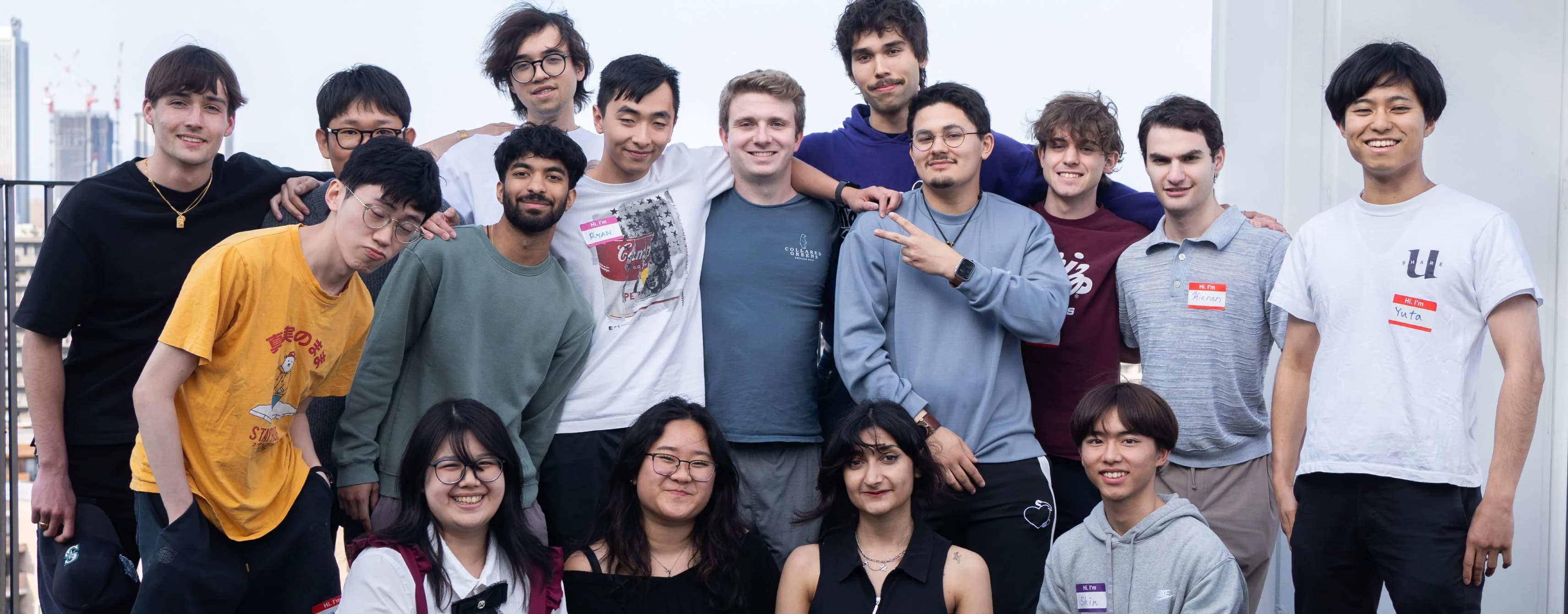
Kitchen Zero is U Share’s food lab. With a chef and students from around the world, we make ingredients priced low by standards and habit the star of the plate.
Japan today
Fewer people grow and catch our food, while many visitors come to Japan looking forward to its food.
37%
Food self-sufficiency rate (calorie basis, FY2025)
MAFF
115,000
People working in fisheries (2024). 699,000 in 1961
Fisheries Agency, White Paper
67.7
Average age of core farmers (2025)
MAFF White Paper
82.2%
Inbound visitors who looked forward to “eating Japanese food” before arrival (2024)
Japan Tourism Agency
WHY
Why we do this
67%
Reputations can change
Some ingredients are priced low not for taste or nutrition, but because of standards, habits, labor, or distribution. Our first ingredient, octopus head, comes from Hokkaido, which accounts for about two thirds of Japan’s octopus catch.
Source: MAFF, Fishery and Aquaculture Production Statistics 2024 (final). Octopus catch 26,042 t nationwide, 17,470 t in Hokkaido. Statistics do not separate species.
408,069
Student towns are where Japan’s food begins
International students in Japan reached a record 408,069 as of May 2025, roughly double the number ten years earlier. Shops in student towns are among the places where they meet Japanese food in everyday meals.
Source: JASSO, International Students in Japan 2025 (as of May 1 each year; includes Japanese-language institutes from 2011).
28.2%
Make everyday meals a time to learn
About three in ten people in their 20s and 30s skip breakfast; the national target is 15% or less. We talk about what is on the plate and why, at the table.
Source: MAFF, Survey on Attitudes toward Shokuiku (March 2026). Skipping = eating breakfast “2–3 days a week” or “almost never.” Target: 4th Basic Plan for Shokuiku Promotion.
Tables from around the world, rethinking Japanese ingredients.
Cuts priced low in Japan can be everyday food in other countries. In U Share’s residences, where students from many countries live together, the dining table itself becomes a place to learn about ingredients and ways of cooking. Next, students will bring overlooked ingredients from their own countries and turn them into dishes with the chef. The chance to change a reputation starts at an ordinary table.
INGREDIENTS
Ingredients we are awakening
Each dish shows where it came from. Starting with octopus head from Hokkaido, a chef and students are working on these three ingredients now.
Hokkaido
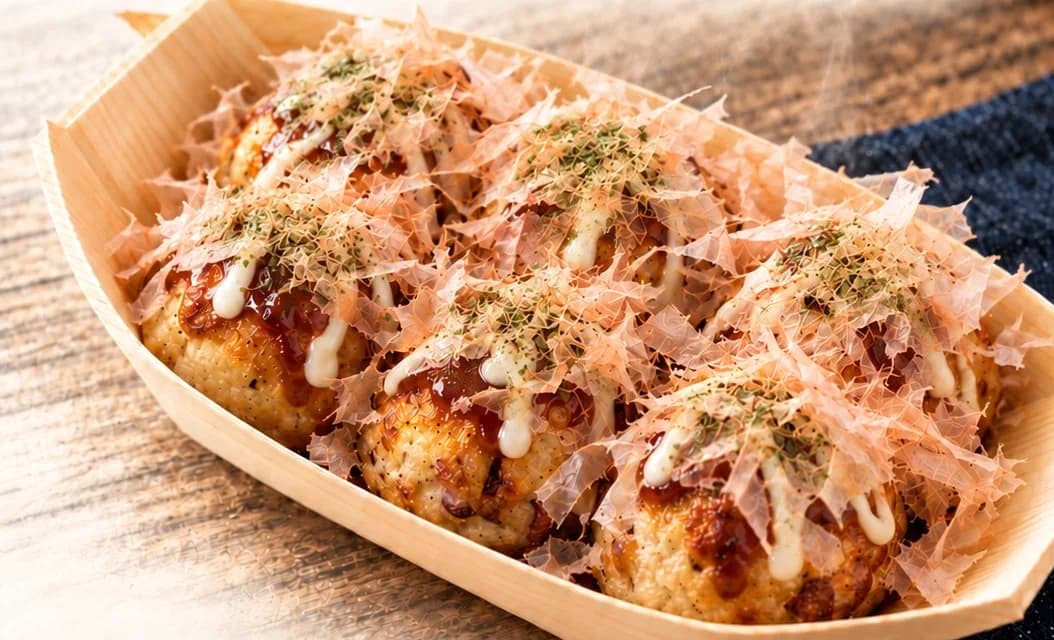
Giant Pacific octopus head
Takoyaki favors the legs. We put the overlooked head at the center.
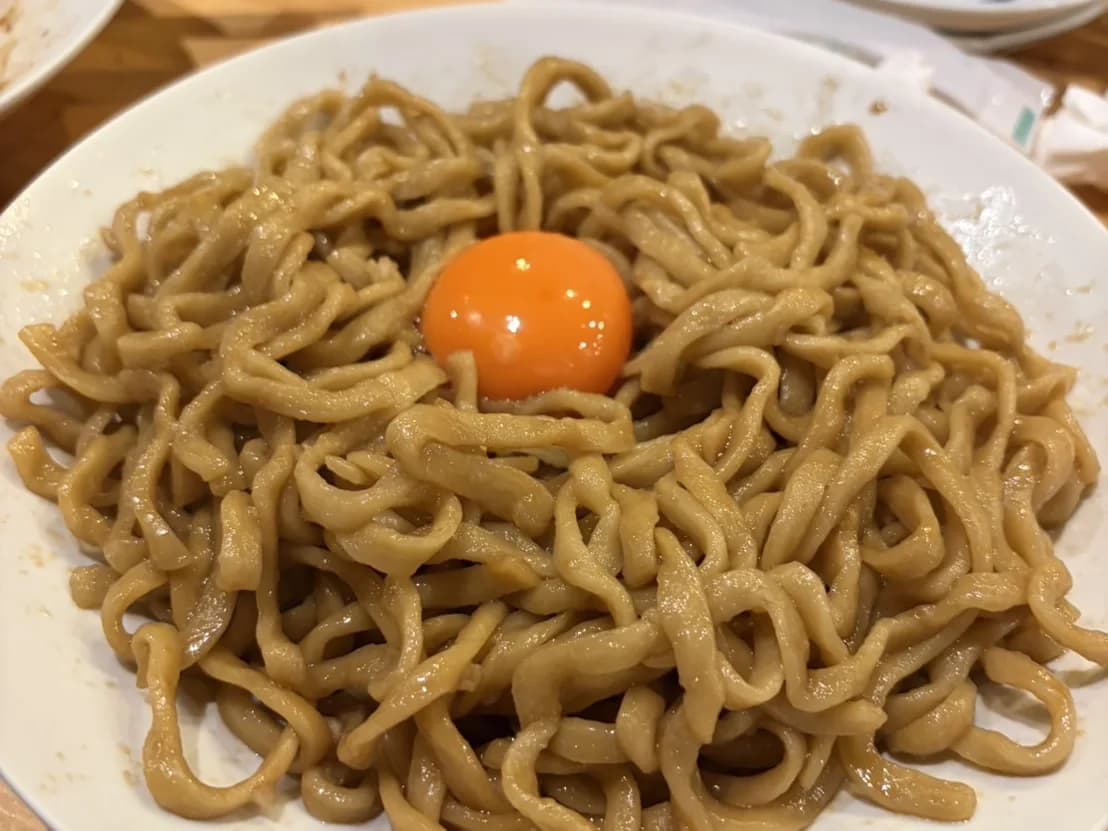
Wagyu trimmings tallow and garlic trimmings
An abura soba in development with the student food truck Waseda Abura Soba Sekiyuoh.
Tuna bloodline (chiai)
A dish with Sichuan pepper and chili, in trial at the lab.
UPCOMING
Schedule
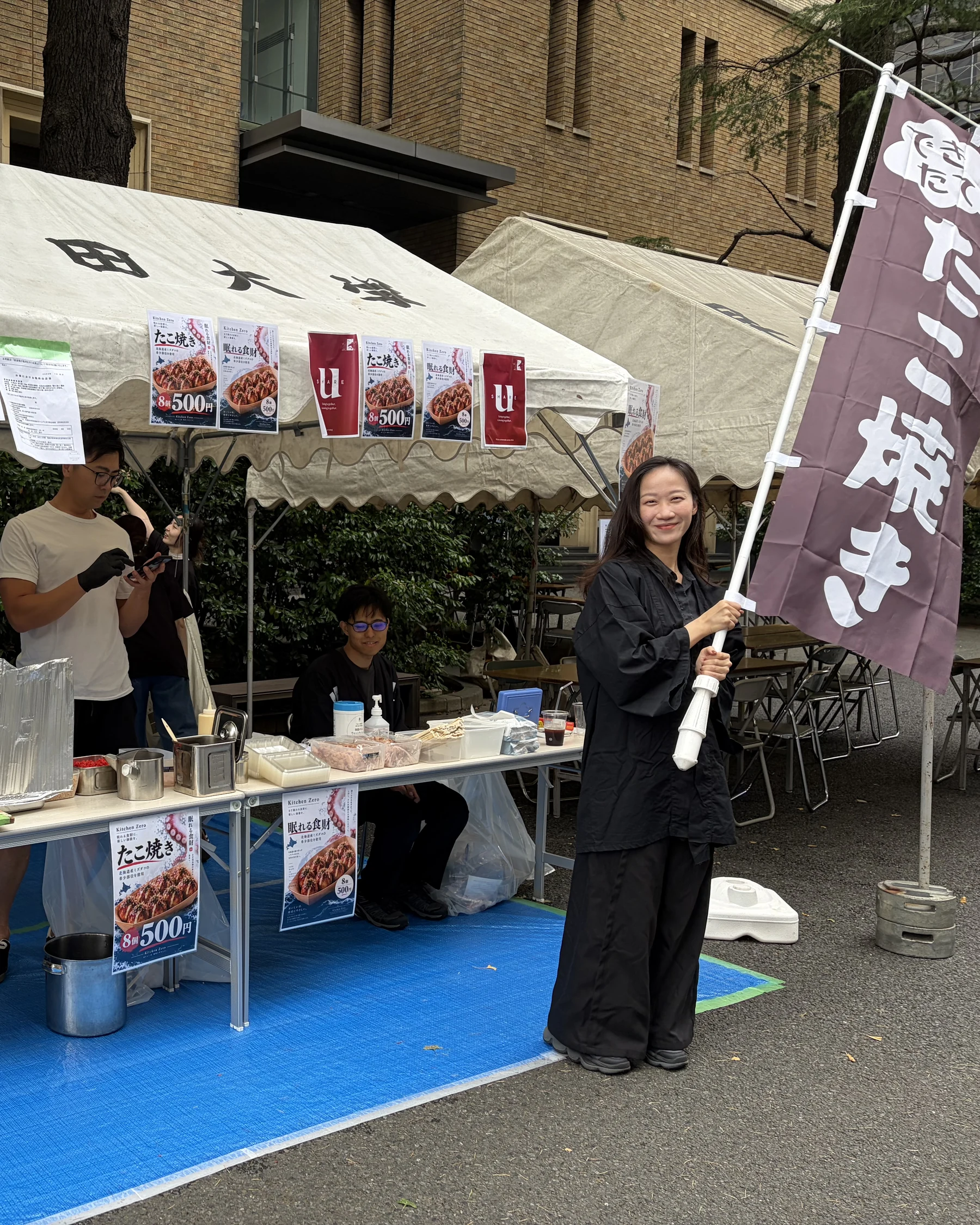
We cook at local events and festivals. Menus vary by venue.
10.17
Sat 12:00–20:00
Futakoshinchi Riverside Festival 2026
Futakoshinchi, Kawasaki
Sleeping Takoyaki (octopus head)
10.24
Sat
Kamata Nishiguchi Shopping Street “Halloween 2026”
JR Kamata Station west exit plaza, Ota
Sleeping Takoyaki (octopus head)
Yoiyoi Kamata Sohonke (Kamata) × Kitchen Zero
10.29–11.3
Thu–Tue 10:00–19:00
Yokohama Takashimaya “LOVE YOKOHAMA LOVE KANAGAWA”
8F event hall
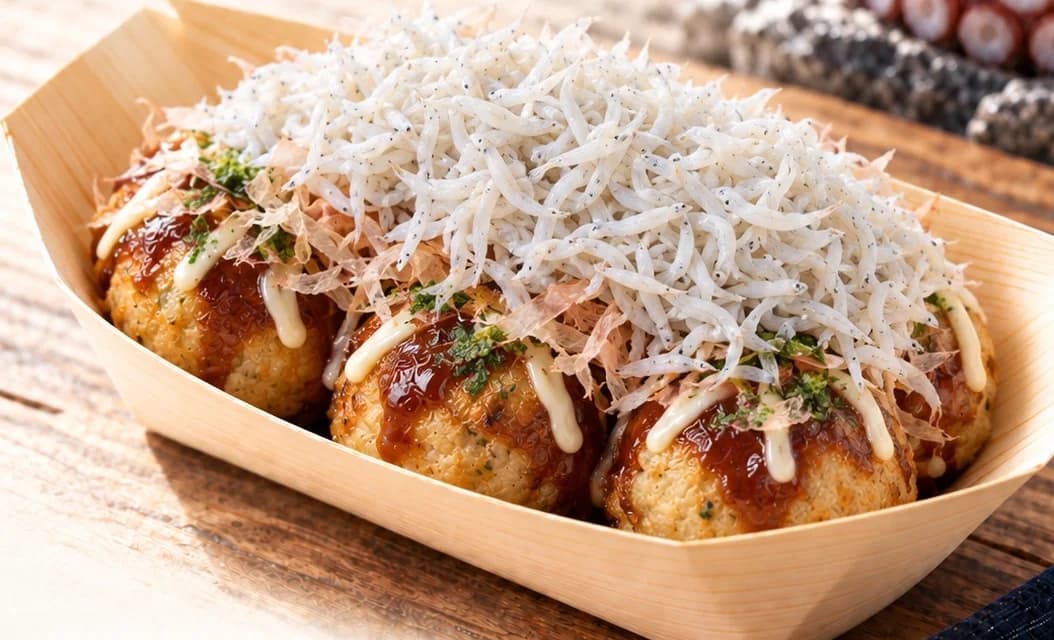
Shirasu takoyaki (Enoshima whitebait × octopus head)
Maguro Oju Sakaecho (Komachi-dori, Kamakura) × Kitchen Zero
11.7–8
Sat–Sun
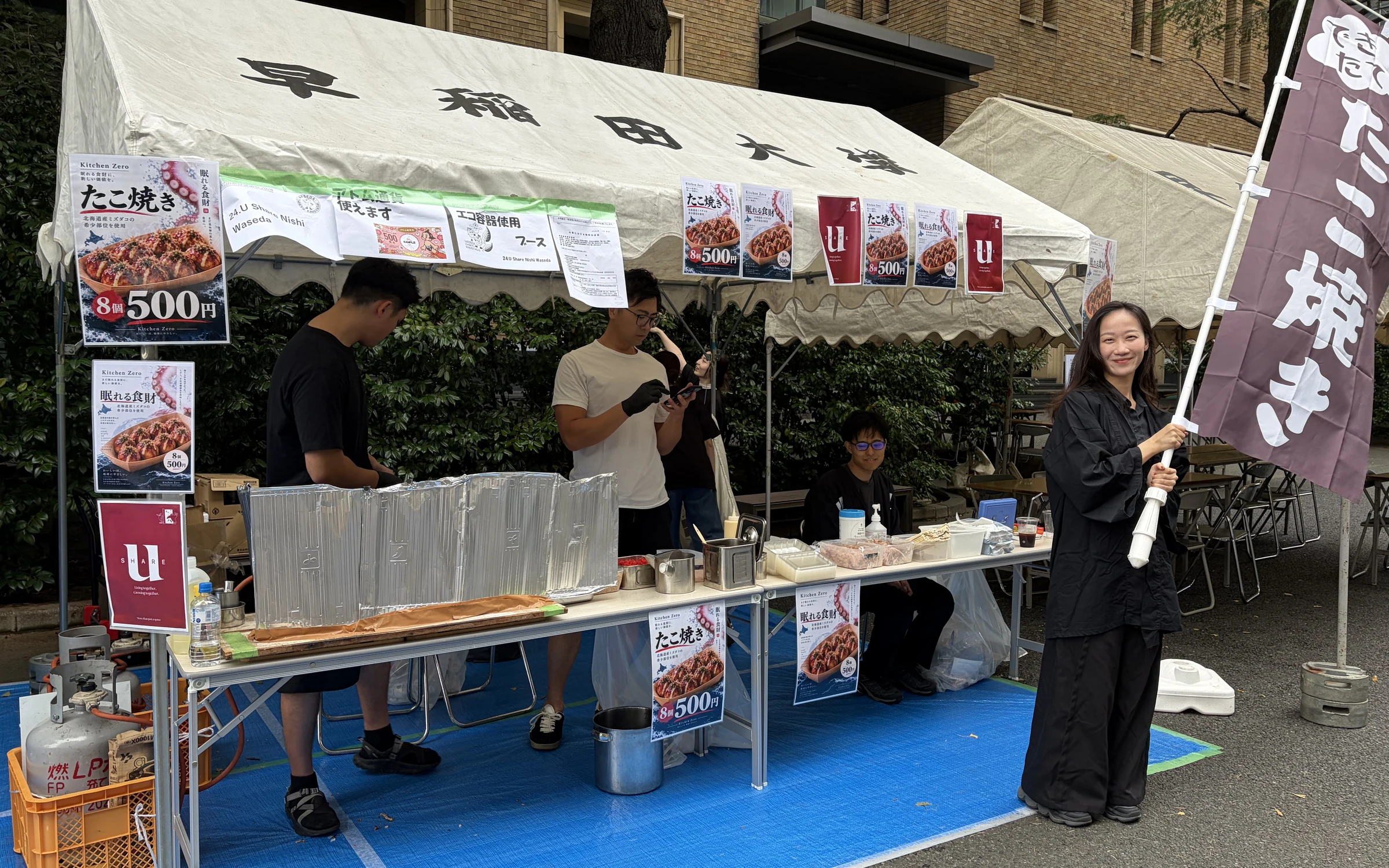
At Kitchen Zero Lab (Plaza Waseda), alongside Waseda Festival 2026
Plaza Waseda, Nishi-Waseda, Shinjuku
Sleeping Takoyaki (octopus head) + abura soba (wagyu trimmings tallow × garlic trimmings)
Waseda Abura Soba Sekiyuoh × Kitchen Zero
Hours and menus may change at the organizer’s discretion.
KITCHEN ZERO LAB
11.7–8
Plaza Waseda
1-18-2 Nishi-Waseda, Shinjuku-ku, Tokyo
Kitchen Zero Lab is our permanent lab inside Plaza Waseda, a student residence run by U Share. This is where we develop and serve our dishes. Opening in October 2026.
- 4 min on foot to Waseda University, Waseda Campus
- 1 min on foot to Sakura Tram (Toden Arakawa Line) Waseda stop
- 9 min on foot from Waseda Station (Tokyo Metro Tozai Line)
FOOD & EDUCATION
Connecting food and education.
Our first shop in the student town
Our first street-front shop, doubling as a research base, is planned for Waseda’s student town in October 2027. For now, we develop and serve dishes at Kitchen Zero Lab in Plaza Waseda.
To the residence table
Ingredients and methods from the lab go into meals at U Share.
Chefs and students
Students bring overlooked ingredients from home and turn them into dishes with the chef.

Kitchen Zero Co., Ltd.
Kitchen Zero Co., Ltd. was established on October 8, 2026, as a U Share subsidiary.
- Name
- Kitchen Zero Co., Ltd.
- Established
- October 8, 2026
- Address
- 1-18-2 Nishi-Waseda, Shinjuku-ku, Tokyo
- Representative Director & CEO
- Kosuke Sasahara
- Directors
- Satoshi Ryuto, Masamichi Ueta
- Executive Officer
- COO Tatsumasa Iwabuchi
- Business
- Operating the food lab Kitchen Zero, event pop-ups, and developing meal and food-education programs for U Share residences
- Parent company
- U Share Inc.