Search for student housing around Waseda and the options fall into roughly four types. Each suits different people, and "cheap vs. expensive" alone won't decide it. This guide compares the four on the five axes that matter most to international students: predictable upfront cost, furnishing, language support, community, and ease of signing.
Type 1: A private rental apartment
Maximum privacy — but the toughest to sign and the hardest cost to total.
The space is entirely your own, yet it often requires a joint guarantor living in Japan and upfront costs such as deposit, key money, and agency fees that are hard to total from abroad. You usually furnish it yourself, and connections with others rarely form on their own.
Type 2: A share house
Easy to meet people — but facilities and privacy depend on the property.
Rent is easier to keep down, and many come furnished. But quality of facilities and rules varies by operator, kitchens and bathrooms are typically shared (so privacy is limited), and language support depends on the property.
Type 3: A student dorm (university or general)
The cheapest option — but expect limited slots, rules, and Japanese-first support.
Intake slots and stay lengths are often limited, rules such as curfews are common, and some dorms operate mainly in Japanese. Facilities are simple — a good fit if you want just the essentials.
Type 4: An international student residence
The type built to resolve the common international-student pain points at once.
Furnished rooms, a total cost (including initial fees) you can see in advance, and a guarantor company so you don't have to find a guarantor yourself. A multicultural community and multilingual support are typical features. U Share is this type.
The five axes side by side
| Axis | Private rental | Share house | Student dorm | Intl. residence |
|---|---|---|---|---|
| Predictable upfront cost | Hard to total | Varies | Low | Total shown |
| Furnishing | You provide | Often included | Basic | Furnished |
| Language support | Rarely | Varies | Often JA-only | JA & EN |
| Community | Rarely forms | Forms easily | Depends | Multicultural, RAs |
| Ease of signing | Guarantor wall | Relatively easy | Limited slots | Guarantor company |
Characteristics of private rentals, share houses, and dorms are general tendencies and vary by property and operator.
Which one fits you?
If keeping cost to a minimum is everything, a dorm is a candidate; if a fully private space is the top priority, a private rental. For students who want a balance — visible costs, furnishing, language support, community, and an easy contract — an international student residence is a strong option.
Where U Share fits
U Share is one way the rightmost "residence" column comes to life in the Waseda area.
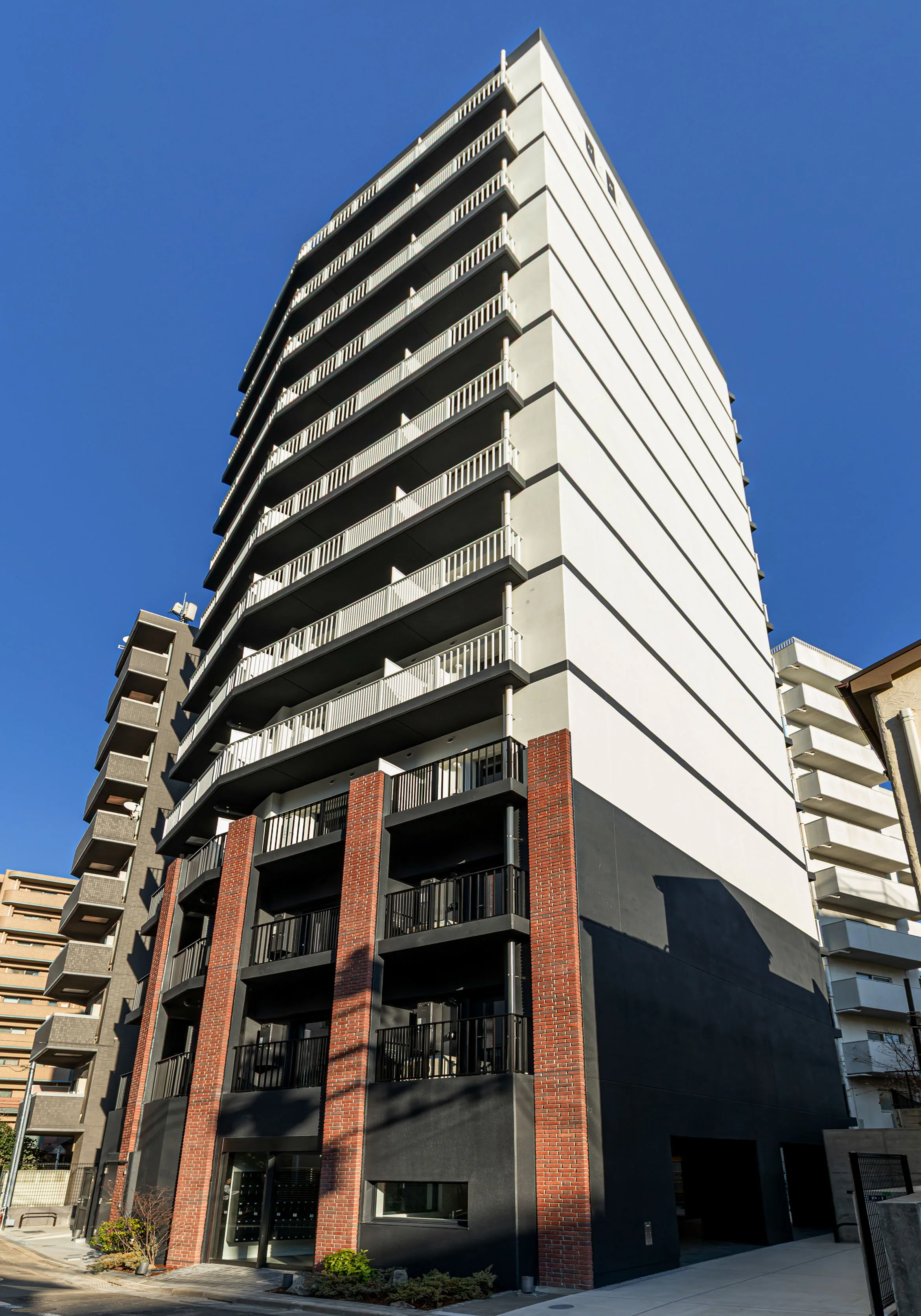
Both buildings sit where several stations overlap: WC1 (Nishi-Waseda) is 5 minutes' walk from Nishi-Waseda Station, 7 from Takadanobaba and 10 from Waseda, while WC2 (Omokagebashi) is 3 minutes from Omokagebashi Station and 6 from Nishi-Waseda. WC2 is about a 7-minute walk from Waseda University's main campus. The monthly payment is rent (from JPY 84,000 at WC2) plus fixed fees, for a monthly total from JPY 127,000 (from JPY 110,500 at WC1), with utilities and internet charged at a fixed monthly amount, already inside that total. Estimated move-in payments are JPY 385,500–398,500 at WC1 and JPY 412,000–421,000 at WC2 (7 months or longer, tax included). See the building-by-building comparison, or find your fit with Find Your Room.
Next steps
For how to weigh your options, see the five things to check; for the money side, dorm vs living alone: which is cheaper?; for getting ready to arrive, the first-time-in-Japan prep guide. When you're ready, submit an entry.