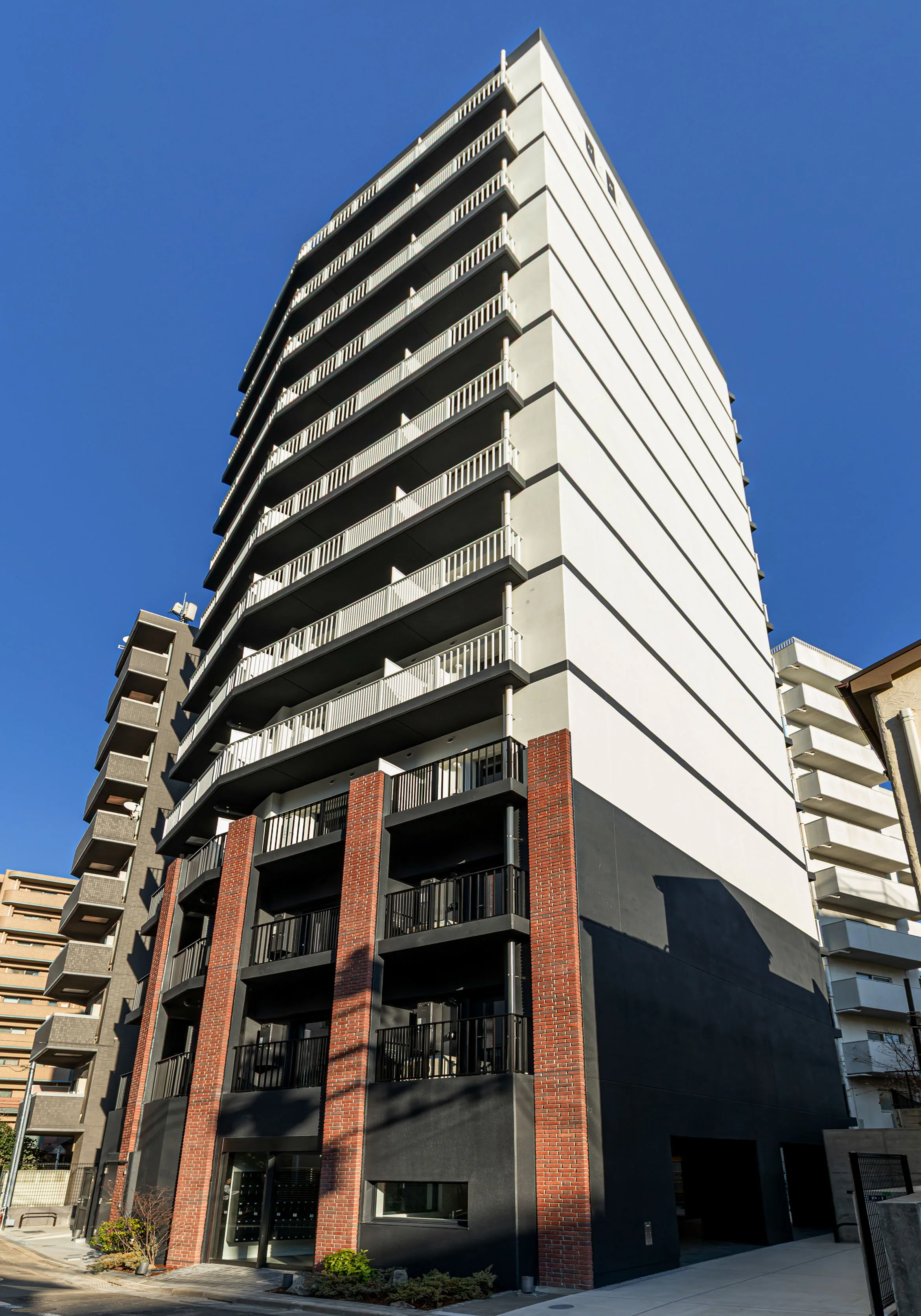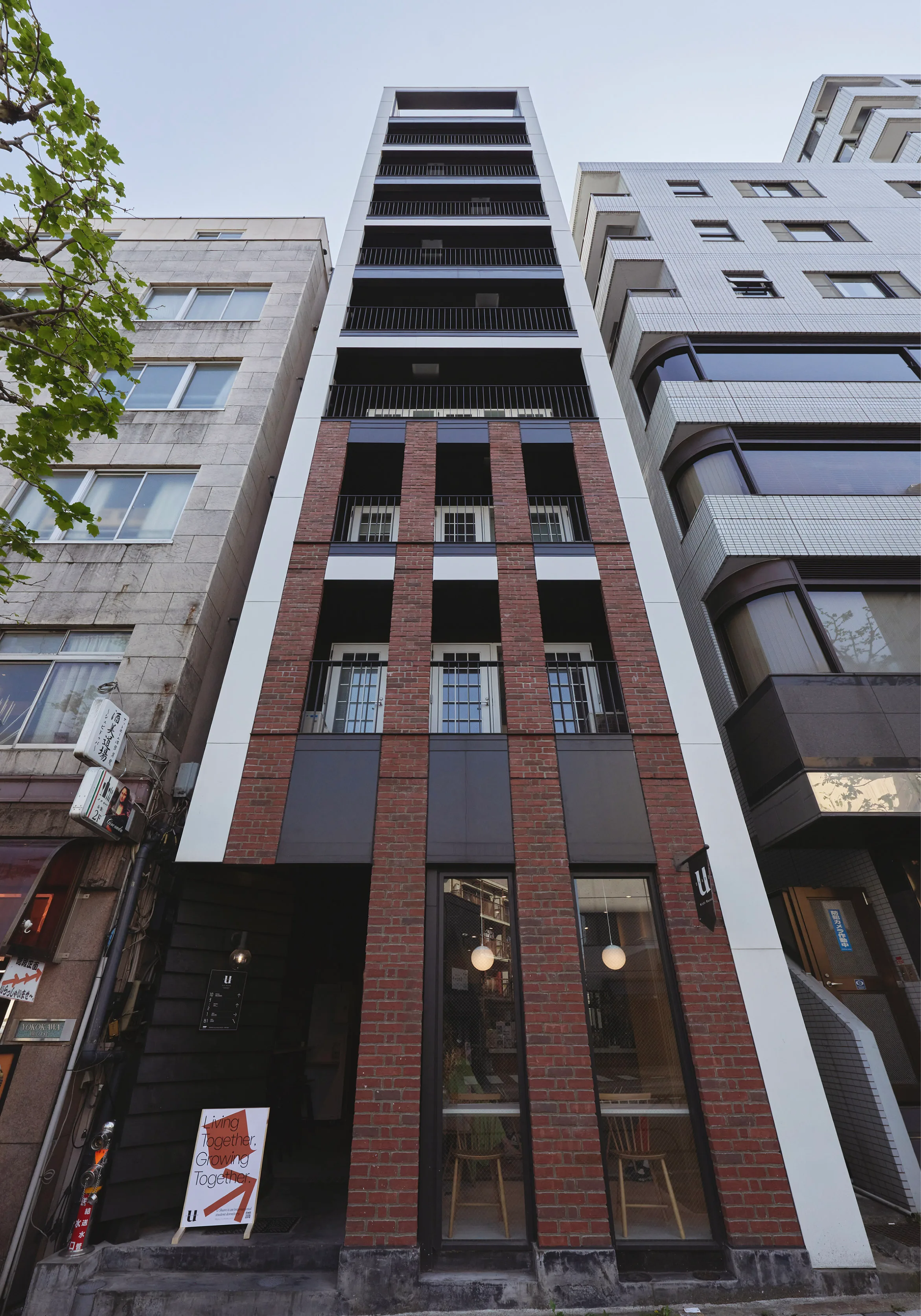
A student share house in Tokyo is a building where you rent one private furnished room and share the kitchen, lounge and often the bathroom. You sign only for your room. Rent is quoted separately from kyoekihi, the monthly common-area fee, and the Japan-specific costs of deposit, key money, agency commission and guarantor company fee land at signing. Below: how the real monthly number is built, and what to ask before you sign.
Search for student housing in Tokyo in English and the words "share house" come back more often than anything else. It is a useful search term and a loose one, covering a converted family home with six residents, a purpose-built building with a hundred rooms, and plenty in between. The label tells you little. The contract underneath it is where international students lose money.
What counts as a share house in Japan (and how it differs from a guest house or a dorm)
A share house, in everyday Japanese usage, is a building where each resident has a private room and shares the kitchen, lounge and often the bathroom. You sign for your own room, not the whole property, and you are not liable for the other residents' rent. Contracts are usually shorter and more flexible than a standard apartment lease, and rooms normally come furnished.
A guest house overlaps heavily in ordinary speech, but the term leans toward shorter, more hotel-like stays: weeks rather than semesters, sometimes a lodging licence rather than a residential lease. That matters for two reasons covered below: whether you can register the address as your residence, and whether the contract survives an academic term.
A dormitory is defined by who runs it rather than by its layout: a university or an organization operates it, eligibility is restricted to a defined group, and the stay length is set by the institution rather than negotiated with you.
We run selective international student residences, so those three words describe how people search rather than how we describe ourselves. The mechanics below are the ones we handle every week.
How much does a share house in Tokyo cost per month?
Rent + kyoekihi + running costs. Japanese listings advertise rent (yachin) as the headline figure, and rent is never the whole payment. Next to it sits kyoekihi (共益費), the common-area or management fee, which pays for corridor lighting and cleaning, the elevator, waste disposal and building upkeep. It is charged monthly alongside rent, it is not optional, and listing sites often set it in smaller type.
Then come the running costs the contract does not mention: electricity, gas and water, each with its own account and its own seasonal swing, plus an internet line you order and pay a setup charge on. Add furniture if the room is empty. A room advertised at a comfortable rent can land tens of thousands of yen above that once every line is in place.
Compare one number per option: rent plus every fixed monthly charge. Our own structure is published on that basis, for standard rooms.
| WC1 (Nishi-Waseda) | WC2 (Omokagebashi) | |
|---|---|---|
| Rent | JPY 69,000–71,500 | Type B 84,000 · Type A 88,000 |
| Fixed monthly fees | JPY 41,500 | JPY 43,000 |
| Monthly total | from JPY 110,500 | from JPY 127,000 |
The fixed monthly fees cover utilities and the internet line, weekly professional cleaning of the shared areas, the common-area fee, and casualty insurance. Ours is a large line because it absorbs what is normally billed separately and variably, such as electricity, gas, water and the internet line, at a flat amount. So the total does not move when the air conditioning runs all August. Whatever you are looking at, ask the operator for the same three lines in writing. An operator who will only quote rent is telling you something.
Move-in costs: deposit, key money, agency fee, guarantor
The Japan-specific costs arrive at signing, and the official guidance for international students is blunt about them: renters are typically asked to pay "shiki-kin (security deposit equal to a few months' rent), rei-kin (gratuity money), real estate agent's commissions, or other fees in advance" (source: Study in Japan, Accommodation). Each one, in turn:
- Shikikin (deposit): held against damage and unpaid rent, refundable in principle, minus whatever the landlord deducts for restoration when you leave.
- Reikin (key money): a payment to the landlord for granting the lease. Not refundable, not credited against rent, and not something you get back for leaving the room spotless.
- Agency commission: the broker's fee for arranging the contract. Not refundable.
- Guarantor company fee: a registration charge for the company that stands behind your rent. Not refundable.
The guarantor point catches students hardest. Japanese leases traditionally require a joint guarantor, a person resident in Japan who accepts liability for your rent. Most students arriving from abroad have nobody to ask, so guarantor companies now fill the role: you pass a screening, pay a registration fee, and the company stands behind your rent. At U Share, contracts run through our designated guarantor company. It is required if you pay rent monthly, and it is not needed when the term is prepaid in a lump sum. Depending on its screening, the guarantor company may still ask for a joint guarantor.
Our own move-in figures are published rather than quoted on request. There is no deposit and no key money, so nothing is held against you and nothing is paid purely for signing. What we charge is disclosed up front and buys something specific: an entrance fee of JPY 145,000 (charged again every two years), an annual membership of JPY 80,000 funding the educational programs, career events and community activities (JPY 40,000 on a 5–6 month contract), and the guarantor company fee, JPY 50,000 at WC1 and JPY 60,000 at WC2. For a standard contract of seven months or longer, the move-in payment guide including the first month is JPY 385,500–398,500 at WC1 and JPY 412,000–421,000 at WC2, tax included.
Minimum stay, notice and moving out mid-year
Two contract lengths matter, and they are separate questions. The minimum stay is the period you commit to, and leaving inside it usually triggers a penalty. The notice period is how far ahead you must say you are leaving, and it applies even when the contract is ending naturally. Ask for both in writing, with the move-out cleaning charge, before you commit.
Our terms, in one place: the minimum stay is 5 to 6 months in principle, with a separate monthly plan for stays of 1 to 4 months (JPY 150,000–155,000 a month at WC1, JPY 184,000–188,000 at WC2, all in, with no initial fees); notice of moving out is three months; and there is a flat exit cleaning fee of JPY 33,000.
Shared kitchen and bathroom: what to ask before you sign
Photographs of a shared kitchen do not tell you how long the queue is before a nine o'clock class. The variable is the ratio of residents to fixtures, and nobody publishes that unless you ask.
- How many residents share one kitchen, one shower and one toilet?
- Who cleans the shared areas, how often, and is it a rota or a professional service?
- Are there quiet hours, and how are they enforced?
- What are the rules on guests, and on guests staying overnight?
- Is laundry on site, and how many machines for how many people?
- Who answers at ten at night when the hot water stops, and in which language?
For reference, our two buildings answer the first two questions like this. At WC1 the shower rooms and toilets are shared per floor and cleaned weekly by professionals, not by residents on a rota. At WC2 every room has its own shower and toilet. Both have shared kitchens and lounges.
Registering your address
You are required to register your address at the local ward or city office after moving in. This is not optional paperwork: your residence record is what a bank account, a phone contract and national health insurance are built on, and immigration procedures reference the address on file.
The catch is that not every property can be used as a registered address. Rooms let on a lodging basis rather than a residential lease sometimes cannot, and students who find that out after arrival lose weeks. So ask before you sign: can I register this address as my residence?
Where to go from here
Still deciding between categories rather than buildings? Compare all four housing types side by side, then read how to choose an international student residence for the criteria that matter once you have narrowed it down. Around Waseda specifically, the four types are set against local numbers in student housing around Waseda compared. To put your own dates and budget against real rooms, use Find Your Room. Our residences, rooms and application flow live on U Share Student.