A dormitory for international students in Tokyo comes in three forms: run by your university, run by a local government or another organization, or privately operated and open to students of any university. Eligibility, stay limits and application calendars differ for each. University dormitories are allocated by lottery and are not guaranteed, so the working assumption is: apply, and secure a second option in parallel.
What follows is a map of the supply side, not a verdict on which type is best. That comparison lives on our four-way comparison of housing types.
Three kinds of dormitory in Tokyo
University-run dormitories are operated by the university you attend, and eligibility is the first filter. It is often narrower than students expect. At Waseda, for example, the university's official guidance states that "For those who hold a university acceptance, you can apply for university-operated dormitories and university-affiliated dormitories," while students already enrolled cannot apply to university-operated dormitories and are directed to affiliated dormitory management companies instead (source: Waseda University, Application). Stay limits are set by the institution, not by you: one Waseda dormitory publishes a period of stay of "2 years" for April admissions and "1.5 years" for September admissions, and "No extension of the period of stay is allowed." Eligibility there is limited to "Freshmen only" (source: Waseda University, dormitory page). Other universities publish their own terms, so read the page for the university that admitted you rather than a general article.
Dormitories run by public bodies and other organizations form the second layer. Japan's official study-abroad guidance describes "Student dormitories operated by local governments and universities," and is candid about the ceiling: "Due to limited numbers of rooms available, not all students can stay in dormitories" (source: Study in Japan, Accommodation). These are typically cheaper than the private market, restricted to a defined intake, and sometimes tied to a scholarship or an exchange agreement. The same guidance notes that dormitory life comes with "Rules such as curfews and wake-up times" and a "Shared kitchen, toilet and bathroom," which is worth knowing before you picture a private studio.
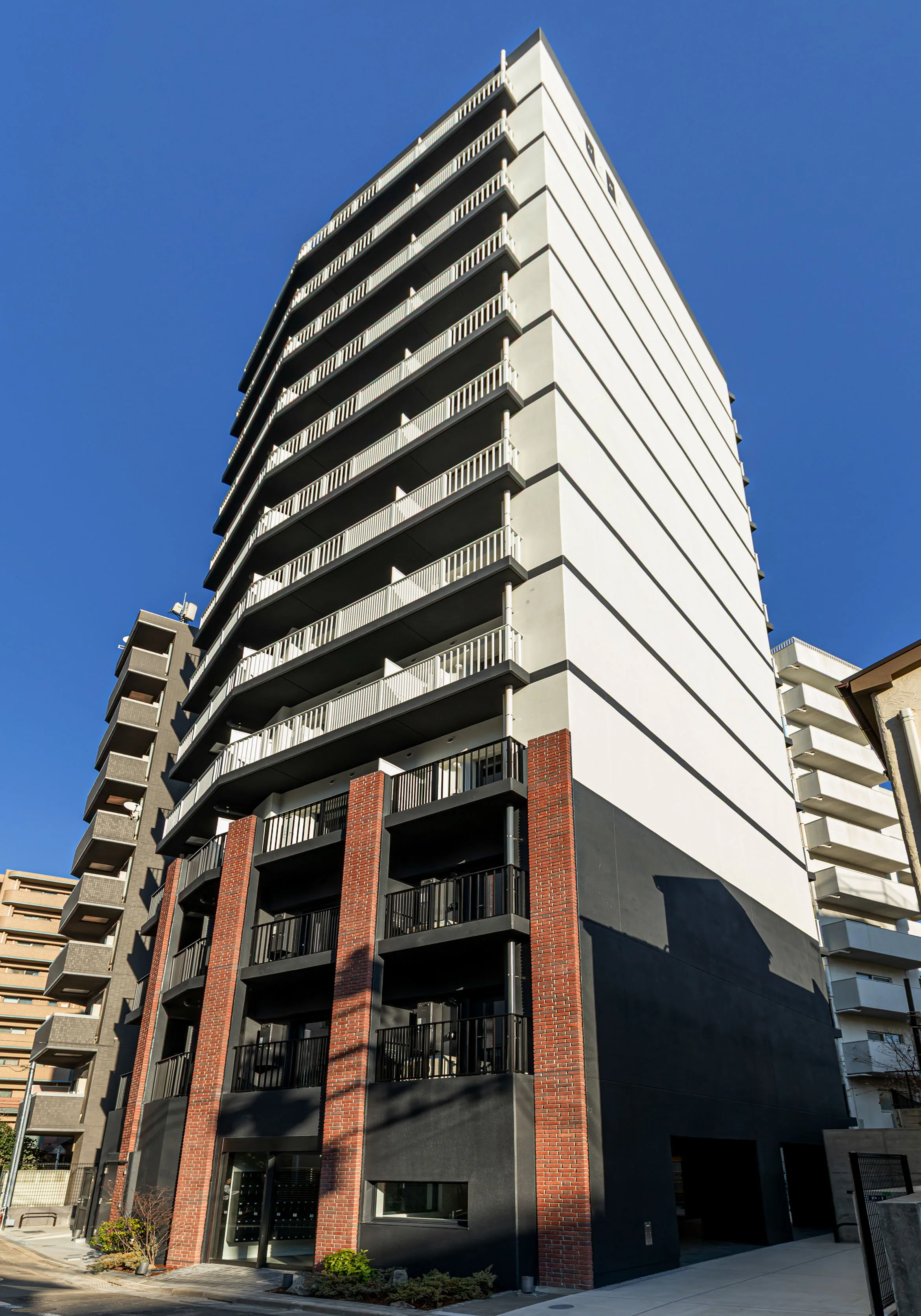
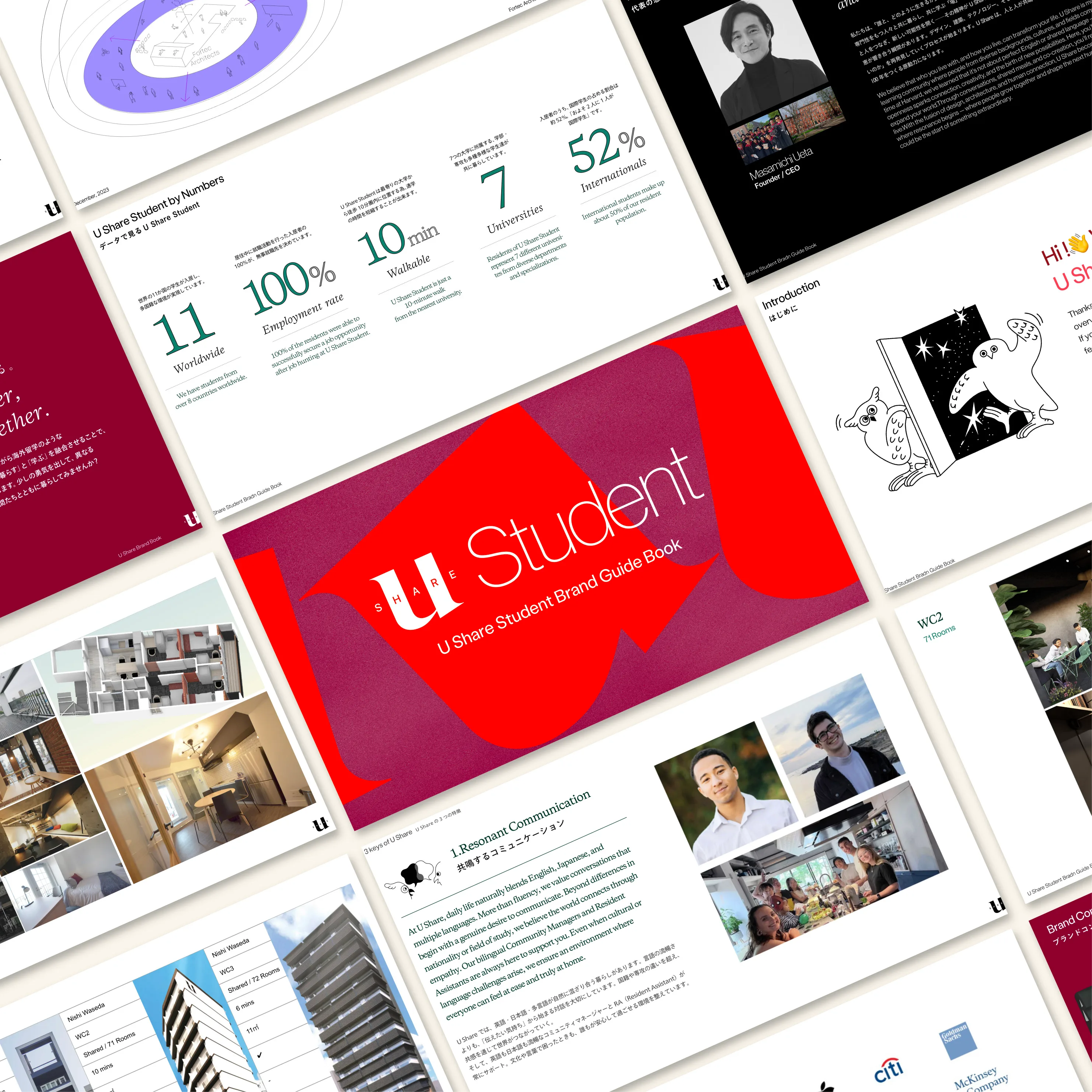
Privately operated international student residences make up the third layer, and the structural difference is that they are not tied to one university. Students from any institution can apply, undergraduate or graduate, degree-seeking or on exchange, and working adults in some cases. U Share is one of these: two buildings in the Waseda area, 102 rooms, residents from more than 20 countries and regions, furnished private rooms, and support in English and Japanese.
Why a university dorm is not guaranteed
The universities are explicit about this on their own pages. Waseda's page for exchange-student dormitories states that "Rooms are allocated by lottery to students who apply during a set period each term," that "the number of applicants is always more than three times higher than the number of available rooms," and, unambiguously, that "even if you apply, you are not guaranteed a room" and "we are unable to meet all students' requests" (source: Waseda University, Room Allocation for Exchange Student Dormitories).
A lottery with more than three applicants per room is not a queue you can improve your position in. Applying is worth doing, and it is not a housing plan on its own. Run a second option in parallel, with a deposit-free cancellation path if you can find one.
Demand for student housing in central Tokyo simply exceeds the rooms that exist, and a lottery is a fair way to allocate a shortage. It does mean the sensible sequence is to apply for the dormitory and secure a fallback, rather than applying and waiting.
Application calendars: April and September intakes
Japanese academic years start in April, with a second intake in September, and dormitory calendars are built backwards from those two dates: applications open months before entry, results are announced before you arrive, and there is no late queue. Private residences work differently, accepting applications through the year subject to availability, which is what makes them usable as a parallel option; our own resident selection runs mainly in spring and autumn, with inquiry-based selection whenever rooms are open, and applying early is free, does not constitute a contract, and starts formal procedures only after your acceptance is confirmed.
One rule overrides the rest if you are applying from outside Japan: allow roughly three months for the Certificate of Eligibility and the visa that follows it. That period sits before your move-in date, not after.
How much does it cost to live in a dormitory in Japan?
The most reliable answer is what international students actually pay for housing, rather than any single building's price list. Japan's official figures, from the 2023 Lifestyle Survey of Privately-Financed International Students, put average monthly housing costs at 41,000 yen nationally and 57,000 yen in Tokyo, within total average monthly expenditure of 105,000 yen (source: Study in Japan, Living Costs and Expenses). Those averages include subsidized dormitory places, which is precisely why they sit below what the open market asks in a central ward.
For context on the market, median asking rents for a studio to 1DK within a 15-minute walk of the station, from June to November 2025, were JPY 100,500 at Takadanobaba, JPY 102,600 at Nishi-Waseda and JPY 111,000 at Waseda (source: SUUMO). Those are rent-only figures, before the management fee, electricity, gas, water, internet and furniture.
Our own number is above both, and it is a different kind of number: rent plus every fixed monthly charge in one figure. The JASSO average is a national mean that includes subsidized dormitory places, and the SUUMO medians are rent before management fee, utilities, internet and furniture. Rent plus fixed monthly fees gives a monthly total from JPY 110,500 at WC1 and from JPY 127,000 at WC2, with the fixed portion covering utilities and the internet line, weekly professional cleaning of shared areas, the common-area fee and casualty insurance. The full breakdown, including what you pay at move-in, is in the cost comparison.
Room type, rules and daily life
Most students start with price. Few decide on it. The lines that decide whether a place suits you are duller and more consequential.
- Private room, or a room shared with someone assigned to you?
- Is there a curfew, and are there rules on guests?
- Meals provided, a shared kitchen, or neither?
- Which language is daily support delivered in, and who answers at night?
- What is the stay limit, and can it be extended?
- How far is it to your campus, door to door?
Our own answers, for reference: private furnished rooms in both buildings, no curfew, shared kitchens and lounges, residents from more than 20 countries and regions, and daily support in English and Japanese from a professional Community Manager and resident assistants. Both buildings are about a 7-minute walk from Waseda University's main campus. Contract terms, including the minimum stay and what you pay at move-out, are set out in the FAQ.
Where do international students live in Tokyo without a dorm?
Three routes stay open: a privately operated international student residence, a share-house-type room, or a private rental. A private international student residence is the closest substitute, because you can contract it from abroad and the room is already furnished.
The share-house mechanics are in our share house guide, the Waseda case is laid out in what to do when the university dormitory does not come through, and the first-time-in-Japan checklist covers the errands of week one.
Where to go from here
To choose between the categories rather than the buildings, read how to choose an international student residence and the four-way comparison. To see what your own dates and budget buy, run Find Your Room. Our residences, rooms and application flow are on U Share Student.