You could not apply for a dormitory. You missed out in the lottery. Your dorm term is ending. You missed the application window. Those are the four reasons students end up searching for housing again in Waseda.
Here is what to do first. Check the university's student dormitory desk for the schemes you can still apply to and when the next window opens. After that you have four routes: the referral service run by a university-affiliated company, a private rental, a share house, or a private international student residence. If you are coming from overseas, start about three months before your move-in date.
The university publishes the schemes, eligibility and application windows itself. Confirm the current terms at Waseda University's Student Dormitory Desk. U Share is not an official Waseda dormitory; it is a private international student residence.
Waseda has three kinds of dormitory
The university points students to three kinds of housing: dormitories it runs itself, affiliated and recommended dormitories (list in Japanese), and dormitories for exchange students. You apply for the university-run and exchange-student dormitories through the student dormitory desk, while affiliated and recommended dormitories are managed by their operating companies. Eligibility and length of stay also differ by scheme.
For the university-run dormitories, the official application page states that recruitment is for incoming undergraduate students, with selection by document review. They sit in several locations in and around Tokyo, and each building has its own location and conditions. The three dormitories for exchange students are within walking distance of the main campus.
Four situations where university housing may not be an option
- Only incoming students can apply to the university-run dormitories. Students already enrolled cannot, so if you are looking for housing as you move into a graduate program, this route is closed.
- Rooms in the exchange-student dormitories go by lottery. The official pages state that rooms are allocated among each semester's applicants, that the ratio is always at least three applicants per room, and that "you are not guaranteed a room." Plan for either outcome.
- There is a cap on how long you can stay. Per the official pages, April entrants may stay two years and September entrants one and a half, and extensions are not normally granted. Enter in April and you move somewhere new from your third year.
- Application windows are fixed by academic year. April entry runs from the previous December into early March, and September entry in June and July. Miss a window and the next round is your next chance.
Four options besides a dormitory
- The referral service run by a university-affiliated company. The university's official FAQ says the student affairs section does not introduce apartments itself and directs students to an affiliated company's referral service. Start here.
- A private rental apartment. If cost is your only criterion and you can compromise on area or building age, this can be the cheapest route. It usually needs a joint guarantor living in Japan, a deposit, key money and an agency fee, plus furniture and appliances, which makes the total hard to pin down from abroad.
- A share house. Rent is easier to keep down and many come furnished. Facilities, rules and language support vary by operator, and kitchens and bathrooms are shared.
- A private international student residence. Open to students of any university, furnished, with a total cost you can see before you sign. U Share is this type.
For the four types side by side on cost, language support and ease of signing, see Waseda housing: 4 types compared.
How to time it
For April entry, applications to the university-run dormitories run from the previous December into early March, and results follow. Wait for the result before starting your private search and you can miss an April move-in. Work backwards from when results land, apply officially, and hold a private option alongside it.
For September entry, applications run in June and July. Use the same waiting period to shortlist private options.
Coming from overseas, allow about three months before you arrive for the Certificate of Eligibility and visa process, and fit housing into that countdown. Our first-time-in-Japan prep guide sets out the sequence.
How U Share works
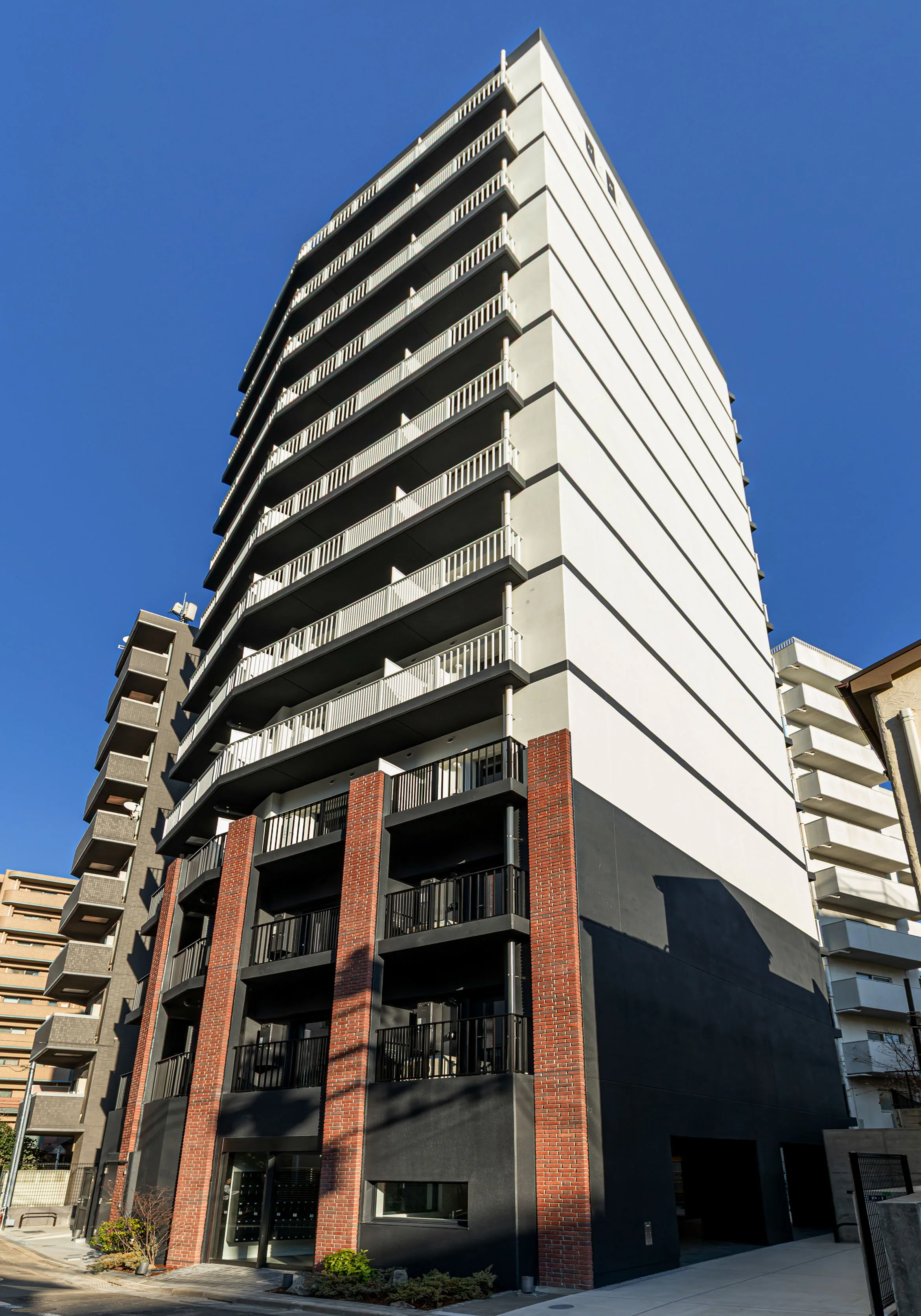
U Share Student runs two buildings in the Waseda area, WC1 in Nishi-Waseda and WC2 in Omokagebashi, with 102 rooms between them. You can apply whatever your university and whatever your year, as an undergraduate, a graduate student or an exchange student. That covers every case above: not eligible, term ending, or unlucky in the lottery. We select residents in spring and autumn, and take inquiries at any time when rooms are open.
The main campus is about a 7-minute walk. Rent starts at ¥69,000, and with fixed monthly fees the monthly total is ¥110,500 at WC1 and ¥127,000 at WC2. There is no deposit or key money, and rooms are furnished. Contracts use our designated guarantor company, which is required if you pay monthly and not required if you prepay the full term.
What to do the week you miss out
- Check the official student dormitory desk pages for the schemes you can apply to and the next window
- Contact the referral service run by the university-affiliated company
- Work backwards from your move-in date and write down your real deadline (about three months if you are coming from overseas)
- Compare candidates on monthly total and upfront cost divided by months of stay, not on rent
- Have two or three private options in progress at once
Contract terms: a minimum stay of 5–6 months in principle (1–4 month stays run on the separate monthly plan), three months' notice before moving out, and a flat ¥33,000 exit cleaning fee. If you need somewhere for a few weeks, another route will suit you better.
For U Share in this area, see our Waseda University page. For the money question, read dorm vs living alone: which is cheaper?, and for the neighborhood, our Waseda area guide. Housing types are compared in how to choose an international student residence and in the side-by-side comparison for international students. Estimate your own cost with Find Your Room, or book an online consultation.