Summer in Japan is synonymous with hanabi (fireworks), a tradition that brings communities together to celebrate the summer and a variety of festivals. From riverside displays in central Tokyo to seaside spectacles in neighboring prefectures, these festivals combine breathtaking fireworks, delicious street food, and a lively festival atmosphere.
A Short History of Hanabi
The word hanabi [花火] literally means “fire flowers”. Fireworks made their way into Japan centuries ago through Chinese and Portuguese trade routes, and by the Edo period they’d become an integral part of summer along the rivers of old Tokyo. The Sumida River Fireworks Festival is one of the city’s biggest and oldest tracing back roughly 300 years.
Fireworks did not start as pure celebration. Early festivals were held to console the spirits of those lost to famine and plague, and to push back against the sickness which crept through the city during the hot, humid months. Over time the historical aspect has faded and it is now simply a festive atmosphere with family, friends, and delicious street food.
Summer 2026 festivals
Tokyo’s hanabi season stretches from late spring through early autumn. Here are a few of the major ones celebrated every year:
- Adachi Fireworks Festival: Tokyo’s traditional season opener along the Arakawa riverside. This is famous for a show that crams roughly 13,000–14,000 fireworks into a single hour. It’s recently moved to late May to dodge peak summer heat. You can expect to see a crowd of up to half a million people.
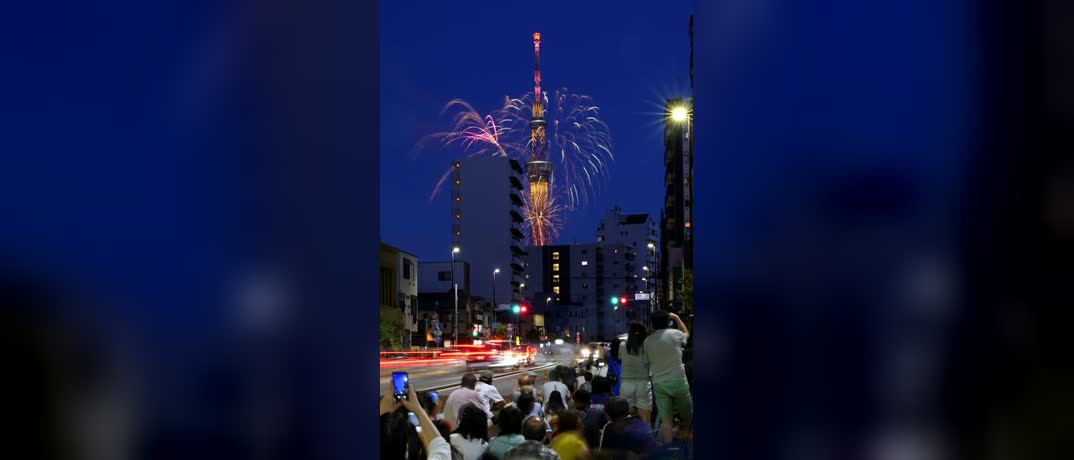
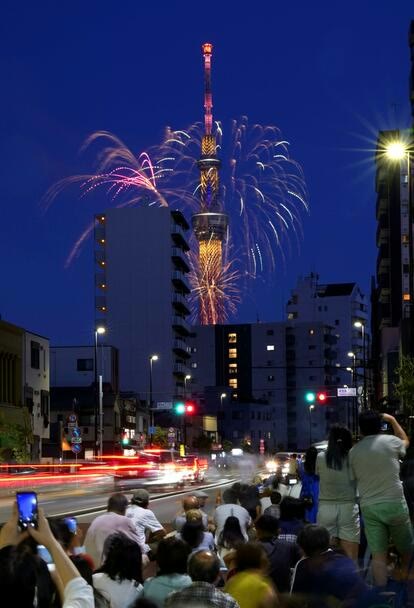
- Sumida River Fireworks Festival: Maybe Tokyo’s most famous fireworks event and one of Japan’s oldest. Dating back to the Edo period, the festival attracts nearly one million spectators every year. Around 20,000 fireworks light up the sky over the Sumida River, creating a spectacular display against the backdrop of Tokyo Skytree.
- Katsushika Noryo Fireworks Festival: This show is launched from the Edogawa riverbank near Shibamata. It is also 20,000 fireworks, but with a fraction of the crowd.
- Edogawa Fireworks Festival: This show has around 14,000 fireworks synchronized to music across eight themed segments. This one is most famous for a Mt. Fuji-shaped burst in the finale.
- Itabashi Fireworks Display: This one is held the same night as Edogawa on the opposite side of the river. It has roughly 15,000 fireworks and is famous for a 700-meter “Grand Niagara Falls” cascade.
- Jingu Gaien Fireworks Festival: Taking place in Meiji Jingu stadium area, you are going to need to purchase a ticket for this one. It has over 10,000 fireworks and live music. Perfect if you’d rather pay for a guaranteed seat than gamble on a riverside spot.
It is worth noting that these firework festivals happen all over Japan all summer. Some of the biggest and most famous festivals happen outside of Tokyo. Additionally, dates and exact details of each festival shift due to weather, anniversaries, and venue changes so make sure to check the festival website before attending.
Tips for Enjoying Firework Festivals
- Arrive early: Popular festivals can become crowded several hours before the fireworks begin.
- Bring a picnic mat: Sitting along the river or in viewing areas is part of the experience and is much better if comfortable. Plus, it helps claim your space.
- Stay hydrated: Japanese summers are hot and humid.
- Try festival food: These festivals are just as famous for the food as the fireworks so make sure to grab some yakisoba, takoyaki, kakigori, or grilled corn.
- Bring cash: Most vendors are cash only so make sure to bring some cash as well.
Etiquette at a Hanabi Festival
Fireworks nights are relaxed and family-friendly, but there are some respectful guidelines to follow:
- Claiming ground with a tarp is completely normal: Just do it within the festival’s designated time.
- Keep walkways clear: Do not set up in front of station exits, on bridges, or across narrow paths, no matter how good the view looks.
- Take your trash with you: As with anywhere in Japan, expect to take all your trash home with you.
Additional Comments
- Most festivals have a system where you can pay for reserved seating ahead of time, but there is also free seating at the venue. You can also get a little creative sometimes.
- Weekday festivals will surely have significantly less people.
- Showing up early to get a decent spot, or any spot, is almost necessary.
Final thoughts
Hanabi festivals are a quintessential aspect of summers in Japan. As spectacular as the fireworks are, it is truly the whole evening around them which makes the festival special. From the walk through the food stalls, the strangers making room for you on a tarp, the collective quiet right before the first shell goes up. When in Japan make sure to carve out time in your summer nights for at least one of the festivals.
Get a feel for daily life at U Share in the photo gallery, and if you want to spend a Tokyo summer here, start from the entry page.