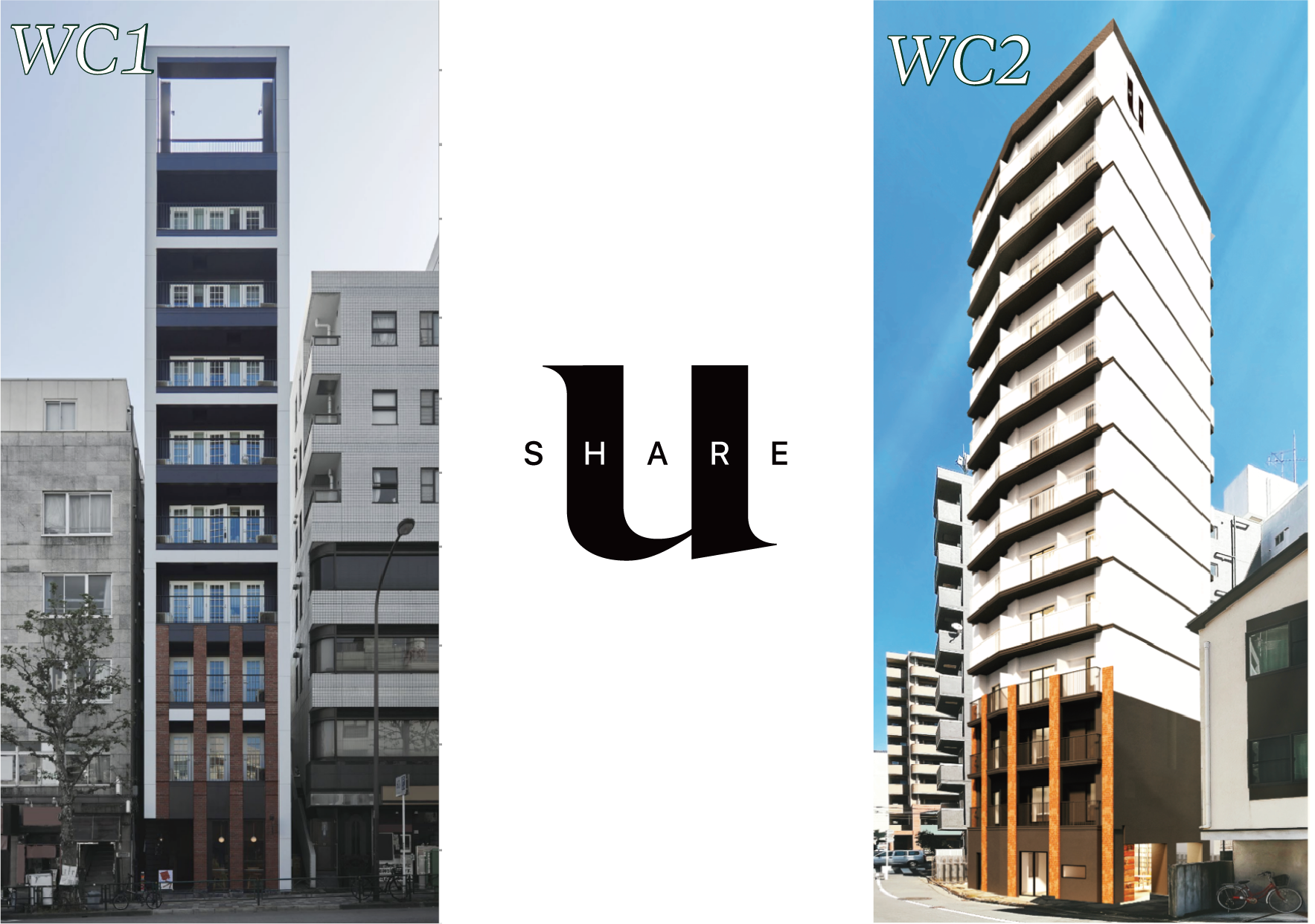
"Is a dorm or living alone cheaper in Tokyo?" It is the question we hear most from students looking at the Waseda area. On rent alone, an apartment usually looks cheaper. But hold the comparison to the same Waseda area. Divide the upfront costs (deposit, key money, agency fee, furniture and appliances) by the months you will stay, add monthly utilities and internet, and line the two up as monthly totals. The gap narrows sharply. Below we go through the monthly cost, then the upfront cost, then the length of your stay.
Compare inside the same Waseda area, using monthly totals plus upfront cost divided by months of stay, and there is very little between them. WC1's monthly total starts at ¥110,500, and with upfront fees spread over a 24-month stay the all-in figure comes to about ¥127,100. The area's median rent of ¥100,500–111,000 is rent only; management fees, utilities, internet and furniture come on top.
Separate "rent" from "monthly total"
The most common budgeting mistake is comparing one rent figure to another and stopping there. What actually leaves your account each month is rent plus a management or common-area fee, plus electricity, gas and water, plus an internet line. When you live alone, each of these is a separate contract, so the real number only becomes visible after you have moved in. Compare the monthly total you actually pay, not the rent.
For reference, median asking rents for studio to 1DK homes near Waseda are ¥100,500 at Takadanobaba, ¥102,600 at Nishi-Waseda and ¥111,000 at Waseda (median, within a 15-minute walk of the station, June–November 2025; source: SUUMO Journal). Those are rent figures. They are not monthly totals.
How much does a dorm in Tokyo cost per month?
Here is the concrete answer for this area. At U Share the monthly total starts at ¥110,500 at WC1 and ¥132,000 at WC2. That figure is rent plus fixed monthly fees, with utilities, internet, cleaning, the common-area fee and insurance already inside it. One number, one payment, and it does not move with the seasons.
Living alone, the same month is the sum of several separate contracts: rent, a management or common-area fee, electricity, gas and water, and internet. Utilities also move with the seasons. Run the air conditioner through a Tokyo summer or winter and your electricity bill climbs; month to month it can swing by several thousand yen. That unpredictability is what makes budgeting hard in your first year, not the headline rent.
For reference on what the bundled portion costs at U Share: utilities and internet are a fixed ¥15,500 per month at WC1 and ¥25,000 at WC2 (cleaning, common-area fee and insurance are listed separately). For a private rental, costs vary by provider and usage.
How large is the upfront cost?
A standard Japanese rental can ask for a deposit (shikikin), key money (reikin), an agency fee, a guarantor company fee, fire insurance, a lock-change fee, and then the furniture and appliances you have to buy. Terms vary by property, so what follows is a worked example built on stated assumptions, not a market average.
Worked example (assumptions). Take a room at ¥100,000 rent. Assume one month deposit, one month key money, one month agency fee and one month rent in advance: that alone is ¥400,000. On top come the guarantor company fee, fire insurance and lock change, and then a bed, desk, refrigerator, washing machine, curtains and lighting. Actual terms differ by property.
Leaving that upfront cost as a one-off is what breaks the comparison. Divide it by the number of months you will live there and add it to your monthly figure. Leave after a year and it is divided by 12; stay four years and it is divided by 48. The same ¥400,000 weighs completely differently.
The U Share figures
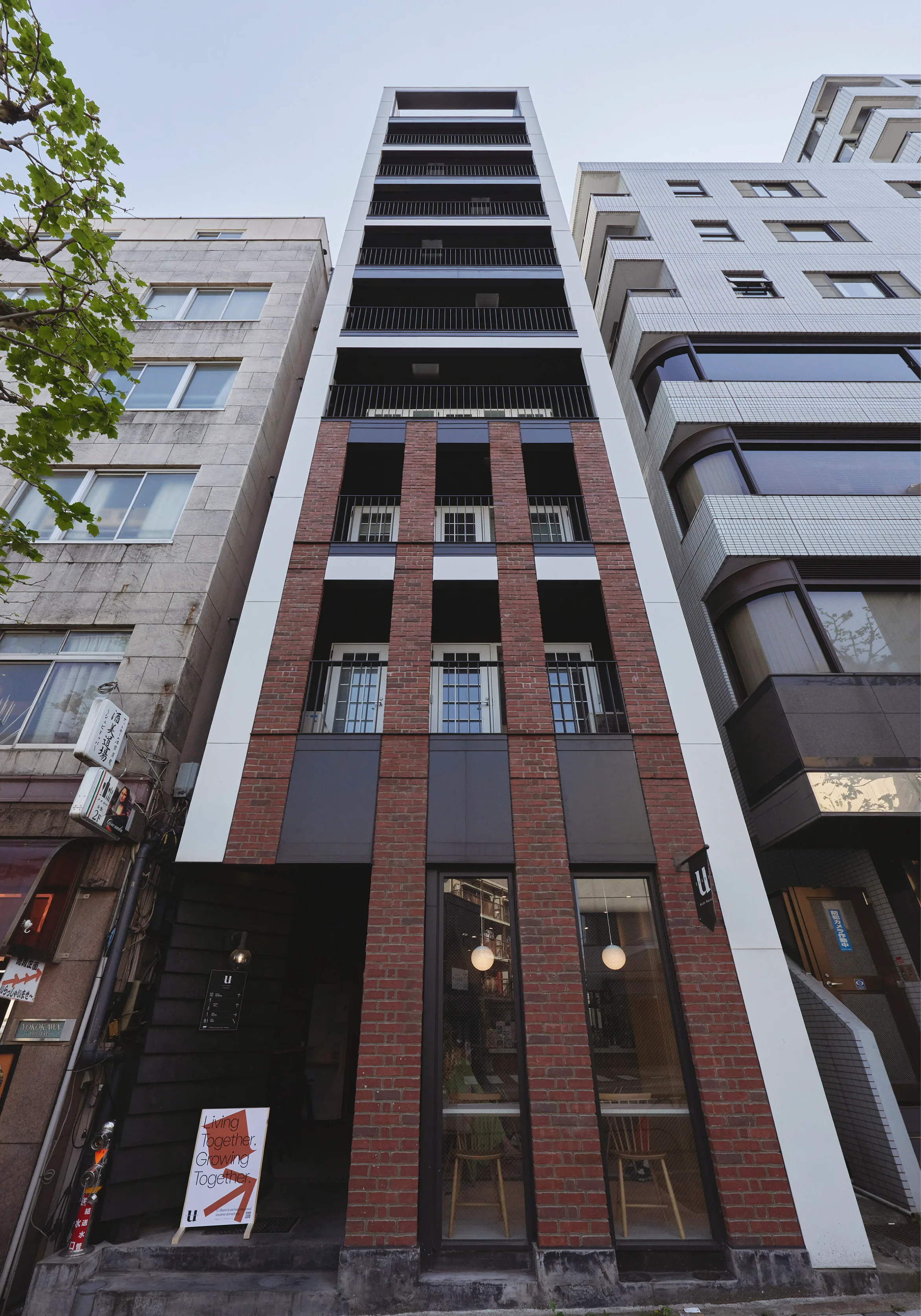
U Share Student operates two buildings in the Waseda area, WC1 in Nishi-Waseda and WC2 in Omokagebashi, with 102 rooms in total. Split into rent and fixed monthly fees, the numbers look like this.
| Rent | Fixed monthly fees | Monthly total | Move-in payment guide | |
|---|---|---|---|---|
| WC1 (Nishi-Waseda) | ¥69,000–84,000 | ¥41,500 | From ¥110,500 | ¥428,500–443,500 |
| WC2 (Omokagebashi) | ¥89,000 (Type B) / 93,000 (Type A) | ¥43,000 | From ¥132,000 | ¥450,000–459,000 |
Figures are for WC1 standard floors; the upper bound covers rooms on the higher floors. For an exact quote, use Find Your Room.
The costs at move-in are an entrance fee of ¥145,000, an annual membership of ¥80,000 that recurs each year (halved to ¥40,000 for 5–6 month contracts), the guarantor company fee (¥60,000 at both WC1 and WC2) and a ¥33,000 move-out cleaning fee paid in advance at move-in. Because the membership recurs each year, factor it in per year of stay. Rooms are furnished, so there is nothing to buy, carry in, or dispose of when you leave. For stays of 1–4 months there is a monthly plan with no entrance fee, membership fee or guarantee fee (only the ¥33,000 move-out cleaning fee is paid in advance at move-in): ¥150,000–164,000 at WC1, and ¥189,000 (Type B) or ¥193,000 (Type A) at WC2, plus ¥5,000 on the 11th floor and above.
The longer you stay, the lower the monthly cost
Lump-sum fees are paid at move-in, and some recur (the membership fee is charged each year); the monthly total is paid every month you stay. Divide the lump-sum fees by your months of stay, add them to the monthly total, and that effective monthly cost falls the longer you live here. For a semester or a single year, building a solo apartment from scratch tends to lose, because you are dividing a large upfront cost and a full set of furniture across twelve months or fewer. A short stay is not a shallow one, either: the common areas put you in front of the same people every day, so friendships form in a semester too (one resident on her year here).
Recurring lump-sum fees are counted for every year of the stay. Here is the effective monthly cost at WC1 (standard floors) by length of stay.
| Length of stay | Lump-sum fees (total) | Per month | Effective monthly cost |
|---|---|---|---|
| 1–4 months (monthly plan) | ¥33,000 move-out cleaning fee, prepaid at move-in. No entrance, membership or guarantee fee | ¥33,000 ÷ months of stay | ¥150,000–164,000 + ¥33,000 ÷ months of stay |
| 6 months | ¥278,000 | approx. ¥46,300 | approx. ¥156,800 |
| 12 months | ¥318,000 | approx. ¥26,500 | approx. ¥137,000 |
| 24 months | ¥398,000 | approx. ¥16,600 | approx. ¥127,100 |
| 48 months | ¥558,000 | approx. ¥11,600 | approx. ¥122,100 |
A worked example, not a quotation. WC1 standard-floor monthly total, plus the guarantor company fee and move-out cleaning fee (once), the annual membership (each year) and the entrance fee, divided across the months of stay. The contract administration fee charged when you re-contract (¥55,000 including tax for an extension of one month or longer) is not included. For 1–4 months, the effective monthly cost includes the monthly-plan fee plus the move-out cleaning fee divided by the months of stay.
Now set that beside a private rental in the same Waseda area. Median rents of ¥100,500–111,000 are rent only. On top come the management or common-area fee, electricity, gas and water, and an internet line. Most properties here also charge a contract renewal fee every two years, and at move-in you buy furniture and appliances. Divide the rental's upfront fees and furniture costs by your planned length of stay, add its monthly costs, and compare the result with the table above. U Share's effective monthly cost for 24 months is about ¥127,100. A private rental's total varies by property and usage.
Consider cost alongside your commute, building age, and facilities. A private rental may suit your priorities. This article compares costs in the Waseda area.
Compare against the same area, not against national averages, which assume a very different place from a student district inside the Yamanote loop.
What to weigh besides money
- Furniture and appliances. With a furnished room there is nothing to buy, transport, or pay to dispose of at the end.
- Speed of moving in. No separate electricity, gas, water and internet contracts, and no delivery slots to wait for. You unpack and your life starts.
- The environment itself. Residents from 20+ countries and regions meet daily in the common areas, with support in English and Japanese. No amount of in-room equipment provides that.
- What grows with time. Stay longer and you become the one welcoming the residents who arrive after you. The membership recurs each year, and it also pays for that year's events and programs.
Decision checklist
- Did you compare monthly totals, not rent figures?
- Did you divide the upfront cost (deposit, key money, agency fee, furniture) by your months of stay and add it to the monthly figure?
- Did you compare against the same area's market, rather than a national average?
- Did you decide how long you will stay before running the numbers?
- Did you line up the non-money factors too: furnishing, speed of move-in, environment, exit terms?
Contract terms: there is no set minimum stay, but we expect residents to stay six months or longer (monthly contracts of 1–4 months are also available). Moving out requires three months' notice, and there is a flat ¥33,000 exit cleaning fee.
Run your own monthly and move-in estimate with Find Your Room. For the wider budget picture, see what a student month in Tokyo really costs, and for the neighborhood, our Waseda area guide. To compare housing types, read how to choose an international student residence or the comparison for international students. Building details are on WC1 (Nishi-Waseda) and WC2 (Omokagebashi).