You could not apply for a dormitory. You missed out in the lottery. Your dorm term is ending. You missed the application window. Those are the four reasons students end up searching for housing again in Waseda.
Here is what to do first. Check the university's student dormitory desk for the schemes you can still apply to and when the next window opens. After that you have four routes: the referral service run by a university-affiliated company, a private rental, a share house, or a private international student residence. If you are coming from overseas, start about three months before your move-in date.
The university publishes the schemes, eligibility and application windows itself. Confirm the current terms at Waseda University's Student Dormitory Desk. U Share Student is not an official or affiliated Waseda dormitory; it is a privately run international student residence.
Waseda has three kinds of dormitory
The university points students to three kinds of housing: dormitories it runs itself, exclusive and affiliated dormitories (list in Japanese), and dormitories for exchange students. Exclusive and affiliated dormitories are run by companies and organizations that partner with the university. Eligibility, length of stay and how residents are chosen differ by scheme.
Incoming students can apply once per person, after passing the entrance exam, to the university-run, exclusive and affiliated dormitories (application page). The three dormitories for exchange students are within walking distance of the Waseda, Toyama and Nishi-Waseda campuses.
WISH vs WID: what's different if you are rejected
The best-known university-run dormitory is WISH. It is open only to incoming undergraduates, including international students, with selection by document review, so you can be rejected. April entrants may stay two years and September entrants one and a half.
For the exclusive WID series, the Student Dormitory Desk FAQ (in Japanese) says there is no screening: residents are chosen by lottery in each application round. You choose the length of your contract, and undergraduates and graduate students alike have no limit on renewals while enrolled. If you are rejected by WISH, compare availability at WID and the other exclusive and affiliated dormitories with private housing.
Four situations where university housing may not be an option
- Only incoming undergraduates can apply to WISH. Students already enrolled cannot, so if you are looking for housing as you move into a graduate program, this route is closed.
- Rooms in the exchange-student dormitories go by lottery. The official pages state that rooms are allocated among each semester's applicants, that the ratio is always at least three applicants per room, and that "you are not guaranteed a room." Plan for either outcome.
- There is a cap on how long you can stay. Per the WISH information page, April entrants may stay two years and September entrants one and a half, and extensions are not normally granted (the Japanese page notes that September entrants may sometimes be allowed six more months). Enter in April and you move somewhere new from your third year.
- Application windows are fixed by academic year. Miss a window and the next round is your next chance. The dates for April 2027 entrants are in the next section.
Application windows for April 2027 entrants
These are the application periods for students entering in April 2027 (incoming, degree-seeking students), as listed on the Student Dormitory Desk's application page. They cover WISH and the exclusive and affiliated dormitories.
- Round 1: December 1–10, 2026 (screening results on December 21, 2026)
- Round 2: January 12–29, 2027 (results on February 5, 2027)
- Round 3: February 16 – March 5, 2027 (results on March 10, 2027)
For students entering in September 2027, the application period is June 10 – July 13, 2027.
Dates for other universities' dormitories, such as Sophia and the University of Tokyo, and admission result dates by university are in University Dorm Result Dates in Tokyo for April 2027 Entry.
These are the dates the Student Dormitory Desk published as of November 2026. Check the latest application page for opening and closing times and any changes.
Four options besides a dormitory
- The referral service run by a university-affiliated company. The university's official FAQ says the student affairs section does not introduce apartments itself and directs students to an affiliated company's referral service. Start here.
- A private rental apartment. Considering different areas and building ages may give you more options within your budget. It usually needs a joint guarantor living in Japan, a deposit, key money and an agency fee, plus furniture and appliances, which makes the total hard to pin down from abroad.
- A share house. Rent is easier to keep down and many come furnished. Facilities, rules and language support vary by operator, and kitchens and bathrooms are shared.
- A private international student residence. Open to students of any university, furnished, with a total cost you can see before you sign. U Share is this type.
Whichever you choose, commuting time is worth comparing. In the Japan Student Services Organization's FY2024 Student Life Survey (published March 2026, in Japanese), 61.5% of daytime undergraduates nationwide living in a dormitory had a one-way commute of 0–10 minutes, against 40.6% of those living in apartments and similar housing. Dormitory residents are more likely to live close to campus. When you look at private housing, add walking time to campus to your criteria so options are easier to compare.
The five types side by side
| Item | University-run dorm (WISH) | Exclusive dorm (WID series) | Private share house | Private rental | U Share |
|---|---|---|---|---|---|
| Who can apply | Incoming undergraduates, including international students | Incoming students apply via the university's application page; the operator takes applications year-round when rooms are free | Depends on the operator | Anyone who passes screening | Students of any university and year: undergraduate, graduate or exchange |
| How residents are chosen | Document review | Lottery in each application round | Operator's screening | Landlord and guarantor company screening | No lottery; after an interview, we suggest a room |
| Length of stay | Two years for April entrants, 1.5 for September (extensions not normally granted) | You choose the contract length; no limit on renewals while enrolled | Depends on the property | Depends on the contract | No set minimum; we expect six months or longer (1–4 month monthly contracts available) |
| Where to apply | Student Dormitory Desk | Student Dormitory Desk or the operator | Each operator | A real estate agent | U Share |
| Where to check the monthly cost | The university's published figures | Figures published by the university and the operator | Each property | Rent, plus utilities and internet contracted separately | Monthly total including utilities and Wi-Fi: ¥91,000 (Plaza Waseda), from ¥110,500 (WC1), from ¥132,000 (WC2) |
The university dormitory columns follow what the Student Dormitory Desk publishes (as of November 2026); the share house and private rental columns describe general tendencies. Check each dormitory's own page for current fees. For cost, language support and ease of signing compared, see Waseda housing: 4 types compared.
How to time it
If you enter in April
For April 2027 entry, applications run in three rounds from December 2026 to early March 2027, with first-choice results announced within two weeks of each round's closing date. Wait for the result before starting your private search and you can miss an April move-in. Work backwards from when results land, apply officially, and hold a private option alongside it.
If you enter in September
For September 2027 entry, applications run from June 10 to July 13, 2027. Use the waiting period to shortlist private options.
If your WISH term is ending
April entrants leave after two years, so you are looking for housing for April of your third year. Enrolled students cannot reapply to WISH, so your next home comes from the exclusive and affiliated dormitories or private housing. You know your move-out date from the day you move in, so starting to look about six months ahead leaves room to choose.
If you are an exchange student
Rooms in the exchange-student dormitories are allocated by lottery each semester, and a room is not guaranteed. Enter the lottery and, working back from your arrival date, keep private options in view at the same time. Allow about three months before you arrive for the Certificate of Eligibility and visa process. Our first-time-in-Japan prep guide sets out the sequence.
For parents
If your family wants to look at how dormitories and private housing differ, and how guarantors and costs work, see our page for parents.
How U Share works
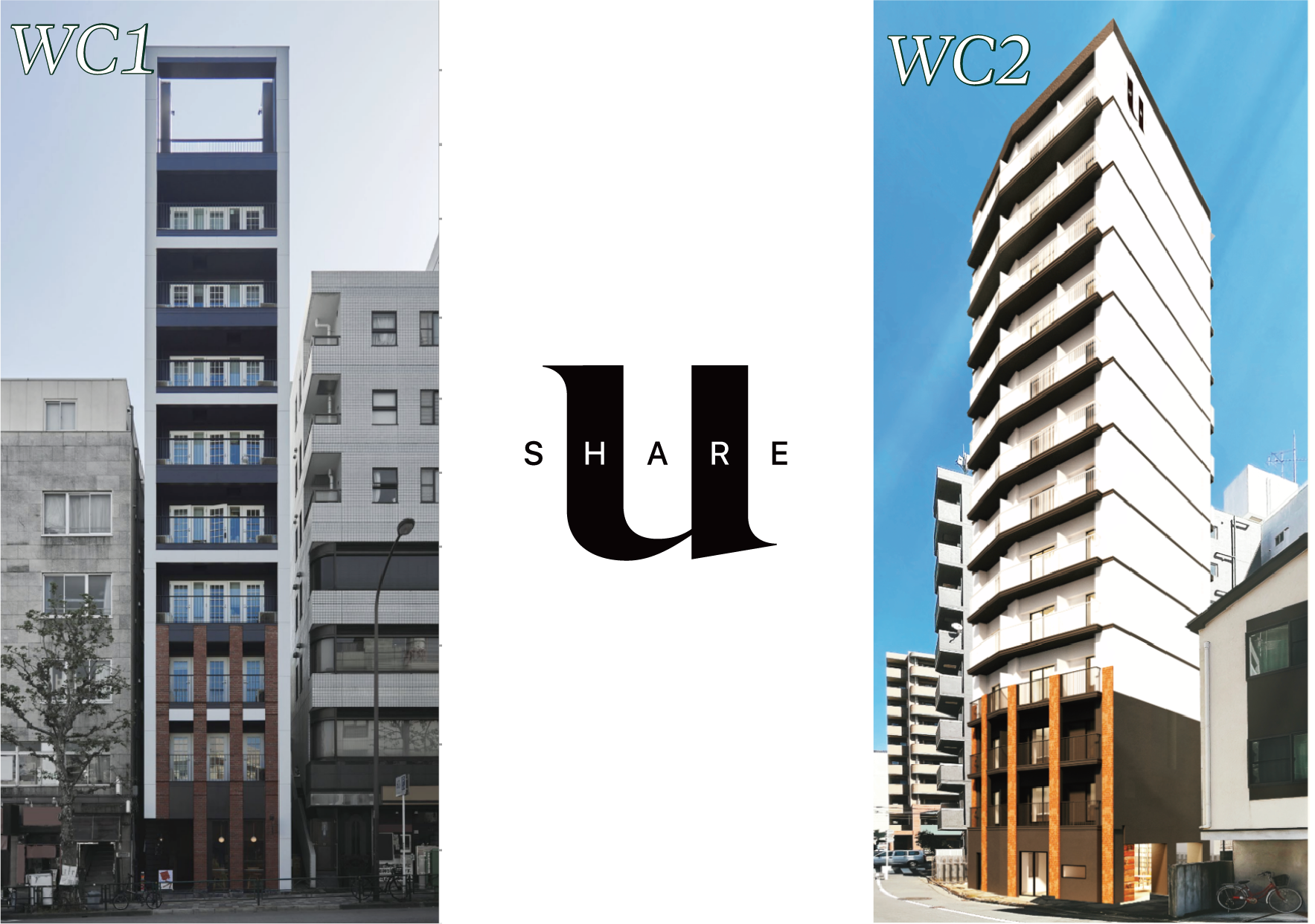
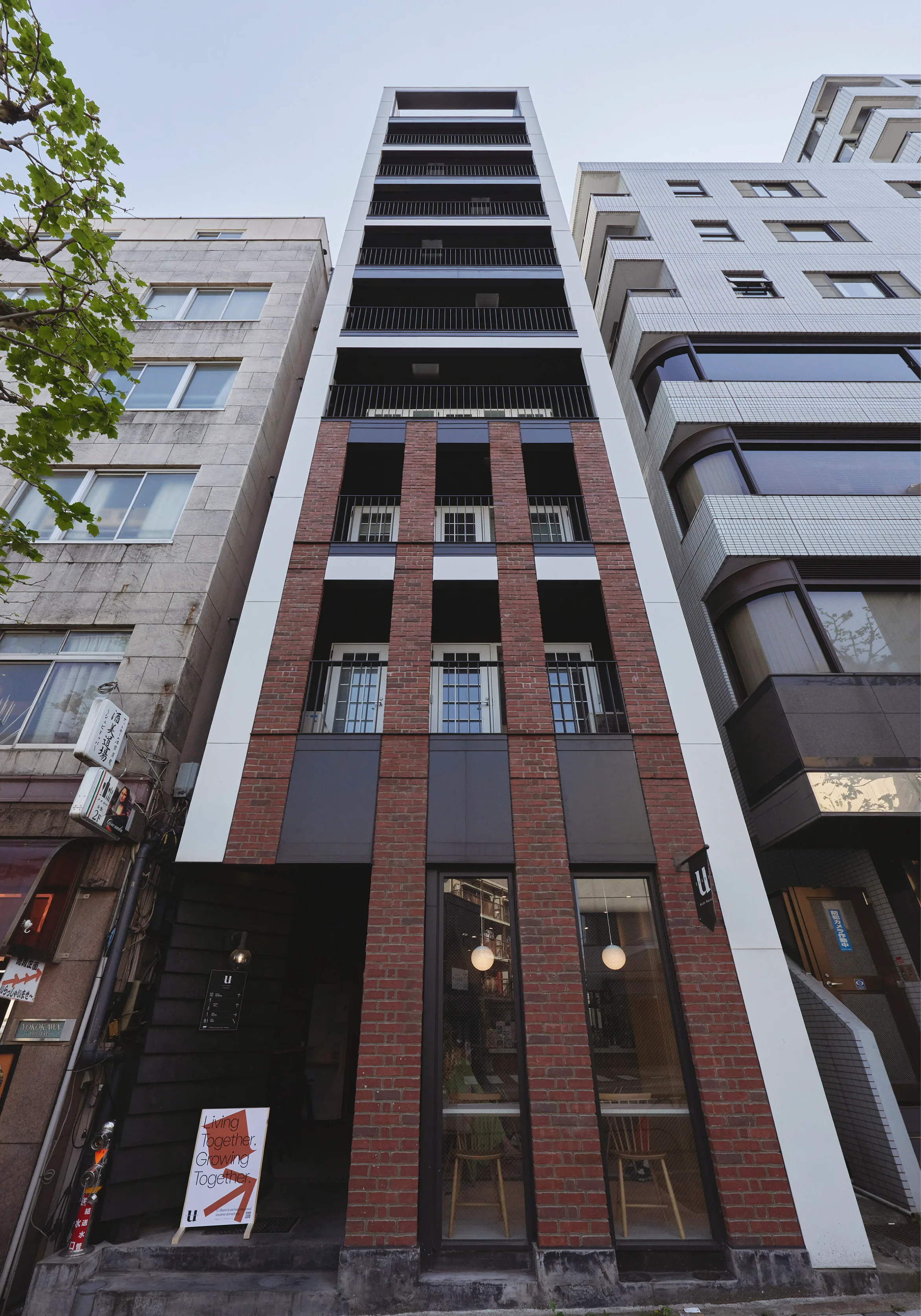
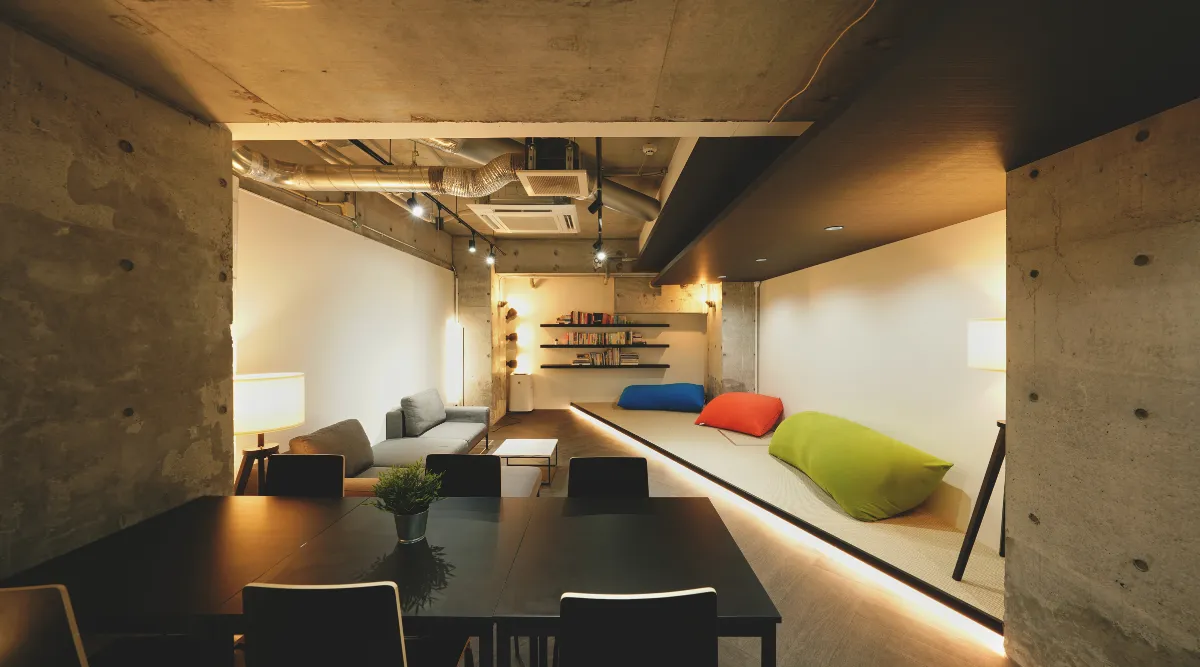
U Share Student is a selective international student residence with two buildings in the Waseda area, WC1 in Nishi-Waseda and WC2 in Omokagebashi, and 102 rooms between them. U Share also operates Plaza Waseda, a nine-room share house. You can apply whatever your university and whatever your year, as an undergraduate, a graduate student or an exchange student. That covers every case above: not eligible, term ending, or unlucky in the lottery. Intake is mainly in spring and fall, and you can talk to us at any time when rooms are open.
Waseda Campus is about a 7-minute walk from WC1 and WC2, and a 4-minute walk from Plaza Waseda. The monthly total is rent plus fixed monthly fees (utilities, Wi-Fi, cleaning, common-area or management fee, and insurance): from ¥110,500 at WC1, from ¥132,000 at WC2, and ¥91,000 at Plaza Waseda. For contracts of seven months or more, initial costs are ¥318,000 at every building (see the pricing section on the WC1, WC2 and Plaza Waseda property pages for the breakdown). Rooms are furnished.
You can apply without first finding a personal guarantor in Japan. For standard contracts, monthly payment requires the guarantee company and an emergency contact in Japan. The company is not required if you prepay rent for the full contract term. Its screening may require a joint guarantor. See the guarantor FAQ for details.
What to do the week you miss out
- Check the official student dormitory desk pages for the schemes you can apply to and the next window
- Contact the referral service run by the university-affiliated company
- Work backwards from your move-in date and write down your real deadline (about three months if you are coming from overseas)
- Compare candidates on monthly total and upfront cost divided by months of stay, not on rent
- Have two or three private options in progress at once
Contract terms: there is no set minimum stay, but we expect residents to stay six months or longer (monthly contracts of 1–4 months are also available). Moving out requires three months' notice, and there is a flat ¥33,000 exit cleaning fee. If you need somewhere for a few weeks, another route will suit you better.
Related articles
- Living near Waseda University with U Share
- Dorm vs living alone: which is cheaper?
- How to choose an international student residence
Estimate your own monthly cost with Find Your Room, or book an online consultation.